When a fabric request lands on a sourcing desk, the first question is also the most consequential: is this genuine mulberry silk, or a synthetic silk dressed up to pass as the real thing? The difference is not cosmetic. It drives cost, durability, drape, and the way the finished garment behaves in the customer's hands. This guide gives you practical tests you can run in the sample room before any purchase order is confirmed.
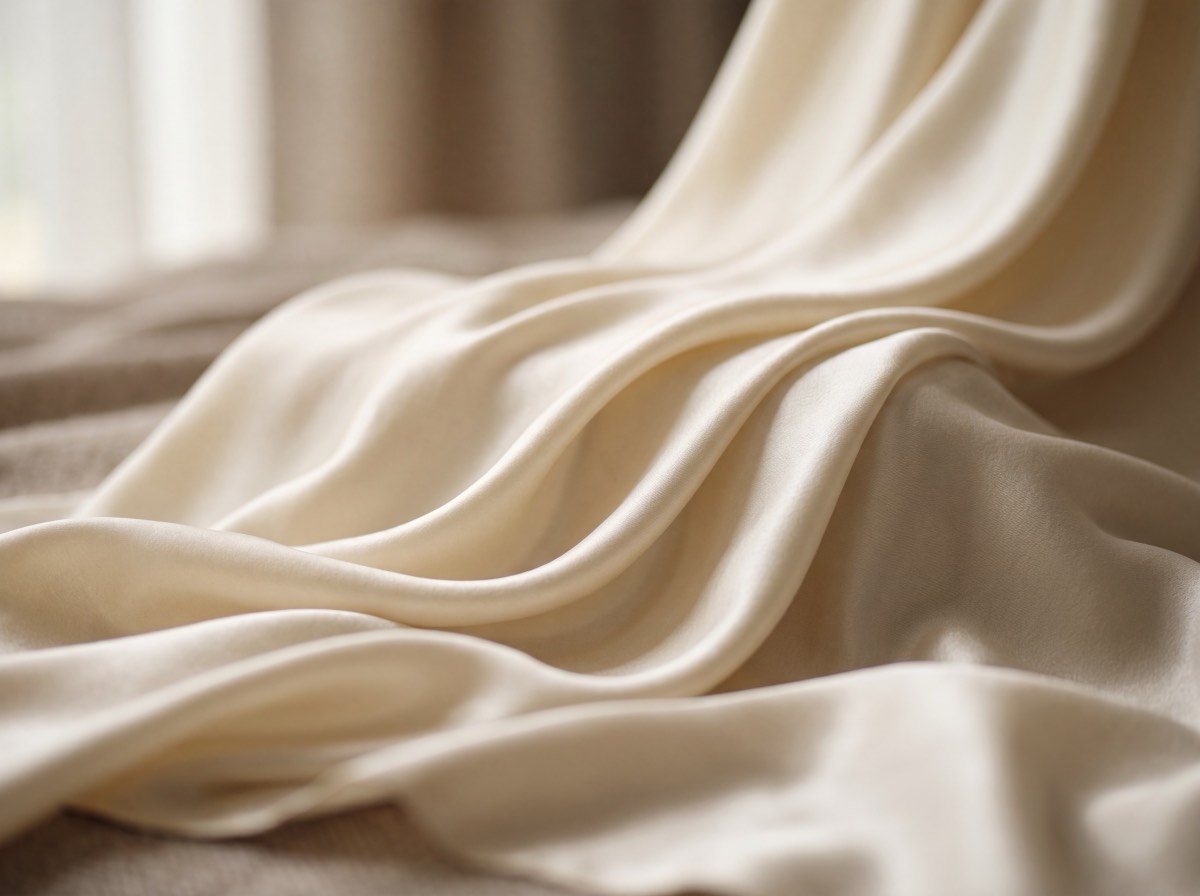
Mulberry silk is reeled from the cocoons of silkworms fed exclusively on mulberry leaves, producing the purest and most uniform natural silk filament available. The synthetic alternatives generally fall into two families: polyester satin, and viscose or rayon, the latter sometimes marketed as a plant-based silk. Both can look glossy on the roll, but their behaviour under heat, moisture, and abrasion differs fundamentally.
Quality tests in the sample room
The most reliable field check is the burn test on a thread pulled from the selvage. Natural silk burns slowly, self-extinguishes when the flame is withdrawn, smells like burning hair, and leaves a brittle ash that crushes to powder. Polyester melts, beads, and leaves a hard black bead with a chemical odour. Viscose burns fast like paper, smells of burning paper, and leaves soft grey ash without any melted bead.
- Sheen: natural silk shows a soft lustre that shifts with the viewing angle; synthetics tend toward a flat, glassy shine.
- Thermal feel: mulberry silk warms and cools quickly against the skin, while polyester stays cooler and slightly clammy.
- Wrinkle recovery: crush the sample in your fist; natural silk relaxes back reasonably well, viscose holds creases stubbornly.
- Sound: rubbing two layers of real silk produces a faint crunching note known as scroop.
How the choice affects cost and performance
The price gap between the two can be substantial, which is exactly what tempts some suppliers to blur the description. But that gap reflects real differences in use. Natural silk breathes, manages moisture, and suits premium apparel, scarves, and luxury linings, while polyester wins on wrinkle resistance, colour fastness, and a low unit cost for volume production. Viscose sits in the middle: a hand close to natural silk, but weaker durability when wet.
In the end there is no universally best option, only the right fit for a given purpose and budget. What matters most is honest labelling, so that you buy exactly what you think you are buying. Through Tkanex you can reach verified fabric suppliers with clear composition labels and testable samples, letting you base each sourcing decision on data rather than on a deceptive shine.