Sourcing defense and tactical apparel fabrics demands more than picking something that feels "tough." Buyers must understand weave structure, finishes, and technical specifications that separate a textile lasting years in the field from one that fails in weeks. This guide breaks down three pillars of military-grade fabrics: ripstop weaves, Cordura nylons, and functional membranes — and what a B2B buyer needs to evaluate offers with confidence.
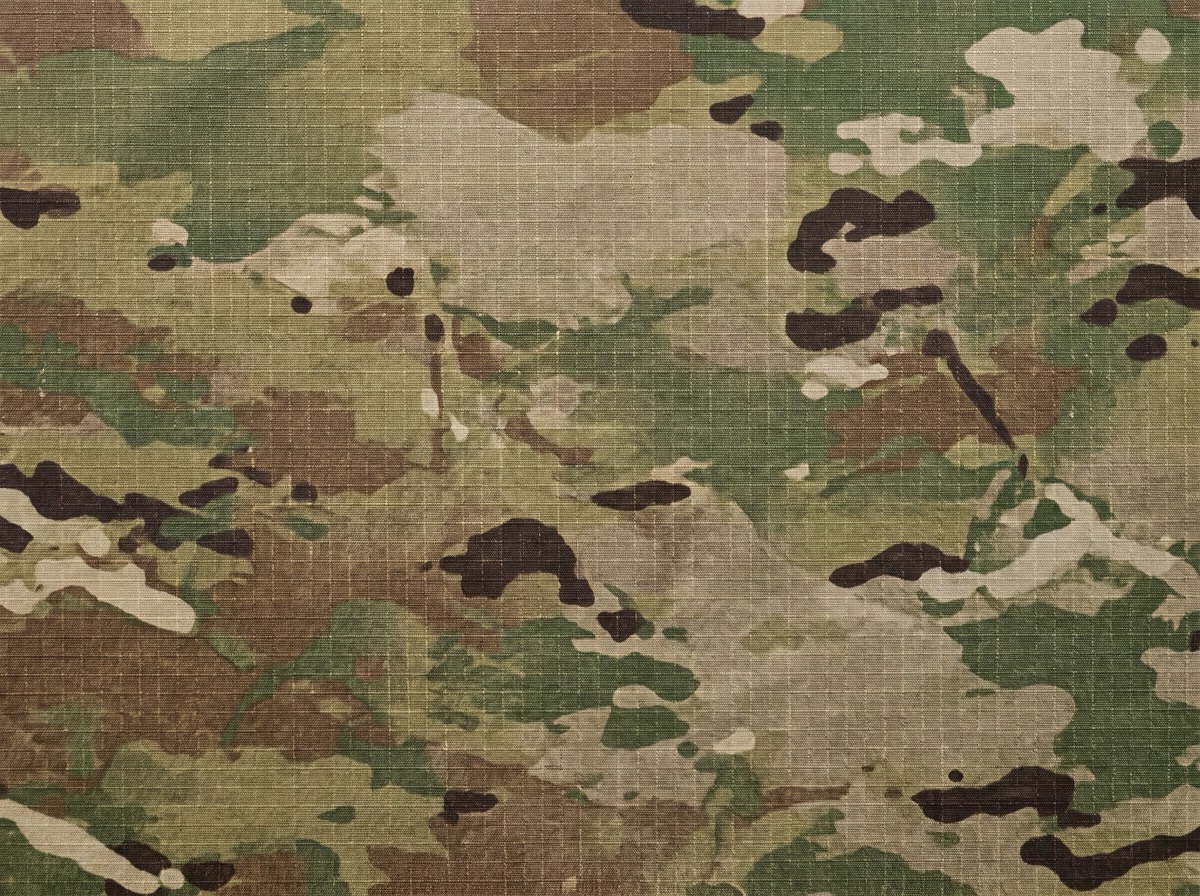
Ripstop: Engineered Tear Resistance
Ripstop is woven by inserting thicker reinforcement yarns at regular intervals in a grid pattern, so any tear is stopped at its boundaries rather than running across the panel. This does not necessarily make the cloth stronger overall — it localizes damage. It commonly appears in polyester, nylon, or cotton-nylon blends (such as the NYCO constructions widely used in combat uniforms), with weights typically ranging from roughly 50 to 200 grams per square meter depending on use. When assessing a sample, check the regularity of the reinforcement grid, the yarn density (denier), and dimensional stability after laundering.
Cordura and Functional Membranes
Cordura is a brand family of high-tenacity nylon fabrics known for outstanding abrasion and wear resistance, used in tactical packs, load-bearing equipment, and high-friction panels. It is specified in denier (for example 500D and 1000D), where a higher number indicates a heavier, more abrasion-resistant — but heavier — yarn. Functional membranes are thin films (such as ePTFE or polyurethane) laminated behind the face fabric to provide waterproofing while still allowing perspiration vapor to escape; they are measured by hydrostatic head (rain resistance) and MVTR (moisture vapor transmission) values.
- Ripstop: lightweight and tear-propagation resistant; ideal for field uniforms and outer layers.
- Cordura: superior abrasion resistance; for packs, reinforcements, and friction zones.
- Membranes: waterproof yet breathable barriers; for weather-protective layers.
- Finishes: water-repellent DWR coatings and infrared-reflective (IRR) treatments for thermal signature management.
Procurement Criteria and Compliance
A professional buyer never views the cloth in isolation from the full specification set: the camouflage type and its fastness, water-repellent treatment, warp-and-weft yarn suitability, and flame-safety certifications where required. Lot-to-lot consistency across production batches is also decisive in large orders, so it is wise to fix tolerance limits in the contract and approve a reference sample.
At Tkanex we connect defense and tactical apparel buyers with vetted suppliers across Ukraine and Europe, offering transparent spec sheets and orderable samples so you can source ripstop, Cordura, and functional membranes with confidence and efficiency.