The end customer rarely sees it, yet the lining is what defines how a garment feels and how long it lasts. When sourcing coats, suits, dresses and jackets, the wholesale buyer almost always faces two main options: cellulose-based viscose and synthetic polyester. Both have their proper place, and the wrong choice shows up quickly as complaints about sweating, creasing or torn linings.
Viscose: luxury and breathability
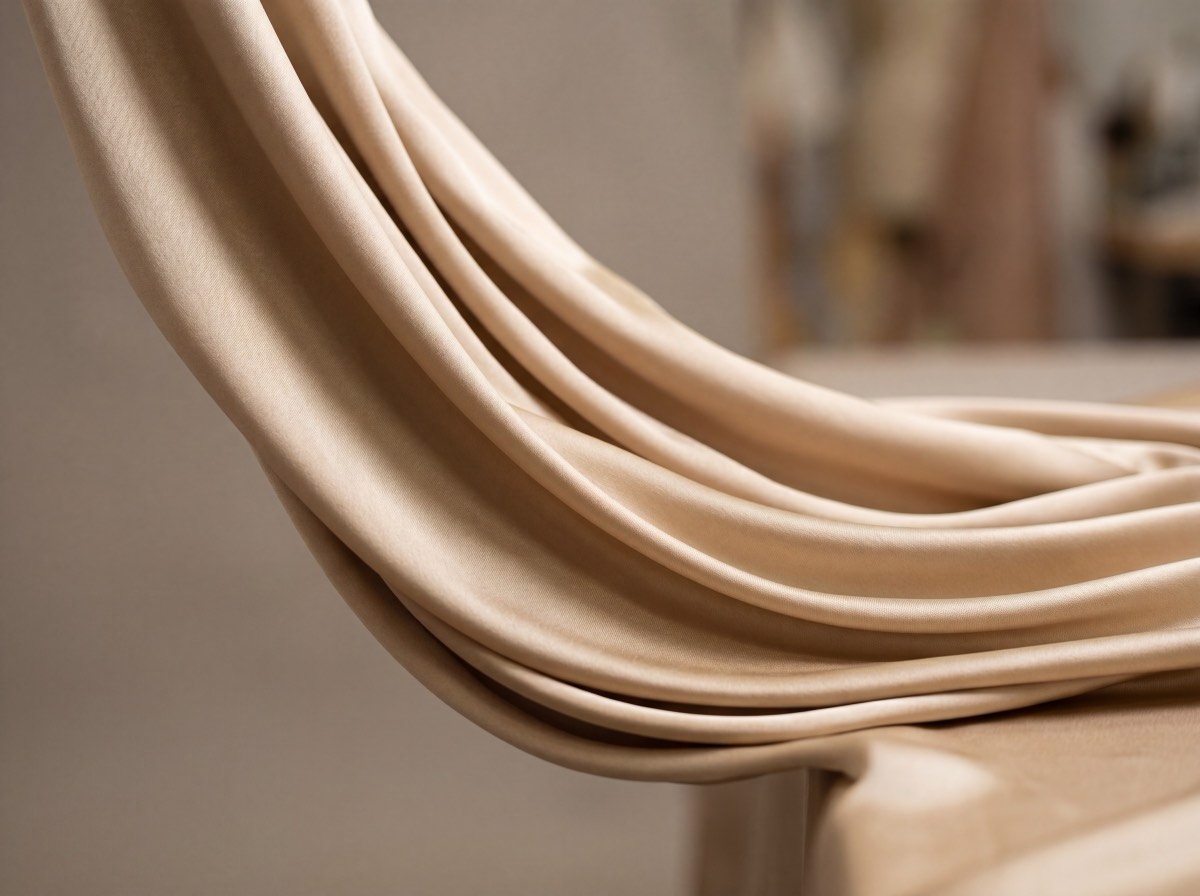
Viscose is made from regenerated wood cellulose, so it carries many traits of natural fibres: soft drape, a quiet sheen, and a good ability to absorb moisture and regulate heat. This makes it ideal for premium linings in wool coats and classic tailoring, where the garment is expected to glide smoothly over clothing. Its drawbacks are that it is weaker when wet, more prone to creasing, and may shrink if untreated, while its price tends to be higher.
Polyester: durability and stability
Polyester is the practical choice: durable, resistant to creasing and shrinkage, dimensionally stable after washing, and cheaper in volume production. Its weakness is poor moisture absorption, which can cause a hot, clammy feel in warm areas. Modern polyester linings, especially woven satin grades treated to improve breathability, have narrowed this gap considerably and made it the most common option in large-scale production.
- Breathability: viscose is clearly superior; polyester needs treatment to come close.
- Durability: polyester withstands repeated washing and abrasion better.
- Stability: polyester is near dimensionally stable; viscose may shrink or crease.
- Cost: polyester is usually cheaper at high volumes.
- Hand feel: viscose is more luxurious, with better drape and a cool touch.
How to choose by product
The practical rule: use viscose for premium seasonal pieces that are dry-cleaned and where hand feel matters, and polyester for everyday wear, uniforms and large-scale production that demand easy care and high stability. Many manufacturers turn to viscose/polyester or viscose/acetate blends to balance comfort and durability.
In the end there is no absolutely "best" lining, only the one best suited to each product, budget and season. Through Tkanex you can compare lining types from trusted suppliers across Ukraine and Europe, request samples, and secure wholesale quantities with clear specifications that guarantee consistent quality in every batch.