Choosing the right fabric is the single most consequential decision in any garment production line. It governs hand feel, drape, durability and ultimately your manufacturing cost. Good fabric selection never starts with color or a pretty swatch; it starts with a precise understanding of the product and how it will be worn. A skilled technologist reads cloth the way they read a tech pack, long before ordering a single meter.
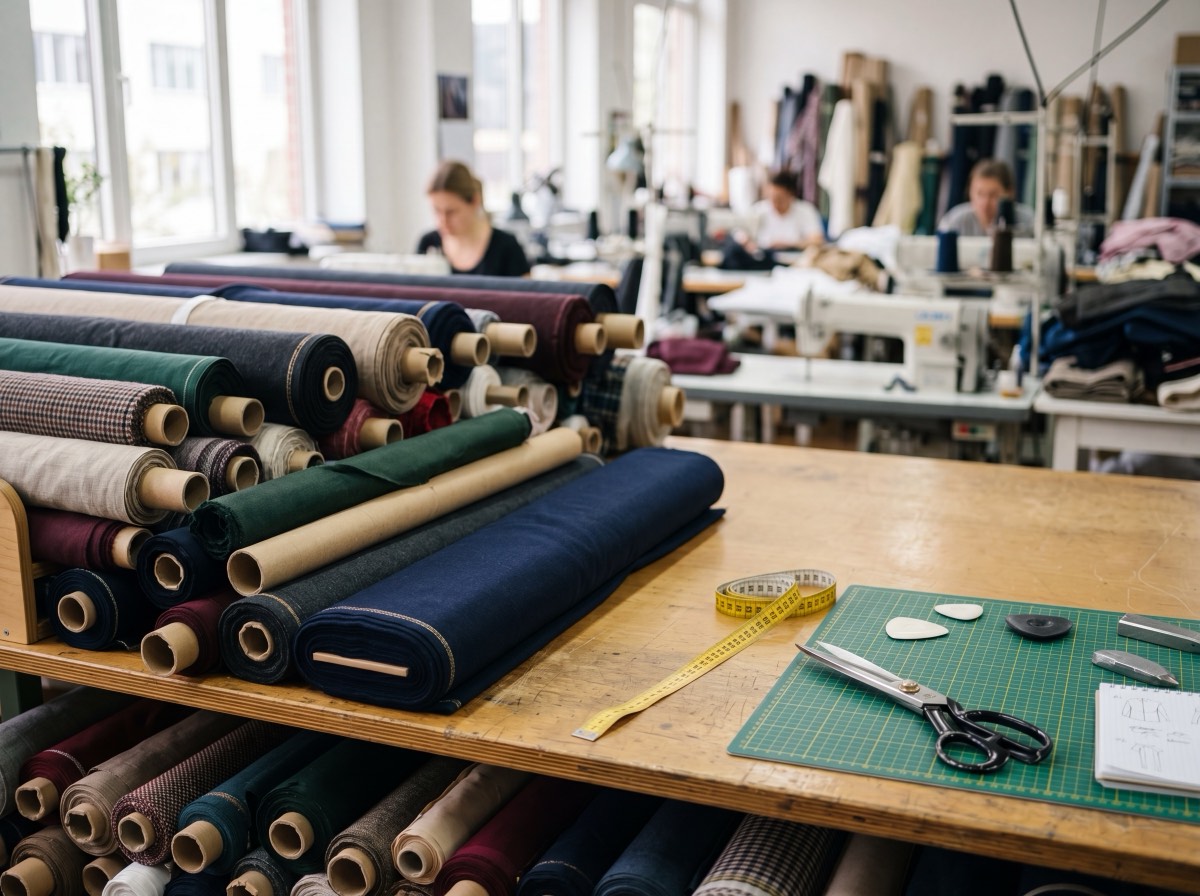
Start with the garment's function, not its look
Before inspecting any sample, define the function. A formal shirt needs a stable woven cotton (poplin or twill) that holds its shape, while activewear demands knit fabrics with an elastane content for stretch and recovery. A fluid dress calls for high-drape materials such as viscose or chiffon, whereas an outer jacket requires heavier weight and abrasion resistance. Defining the end use first narrows hundreds of options down to a short, testable shortlist.
The technical criteria you cannot ignore
Once the fabric category is set, move to the numbers. Fabric weight (GSM) is your first indicator of density and durability and must match the season and use case. Fiber composition, shrinkage after washing, color fastness, and how cleanly the cloth sews without puckering or slipping all determine the quality of the finished product.
- Fiber composition: natural, synthetic or blended, and its effect on comfort and care.
- Weight (GSM): light for summer shirting, heavy for jackets and trousers.
- Shrinkage: wash-test before approval to avoid sizing drift.
- Color fastness: verify resistance to washing, rubbing and perspiration.
- Fabric width and cutting efficiency: directly affects waste and cost.
From sample to bulk
When moving to volume, confirm consistency across production batches. A small variation in dye or weight between rolls can show clearly on the finished piece. Ask the supplier to keep a single dye lot wherever possible, and agree on the acceptable color tolerance in writing before cutting begins.
Fabric selection is equal parts science and craft, and it becomes far easier when you work with a supplier who provides transparent technical data and reliable samples. That is where Tkanex comes in, connecting garment manufacturers with vetted fabric suppliers across Ukraine and Europe, with clear specifications that help you make the right call from the very first order.